20 May 2026

Indigenous Peoples and Local Communities protect more than half of the world’s remaining intact forests. Yet, their territories continue facing growing pressure from extractive industries, infrastructure expansion, and development projects imposed without their consent.
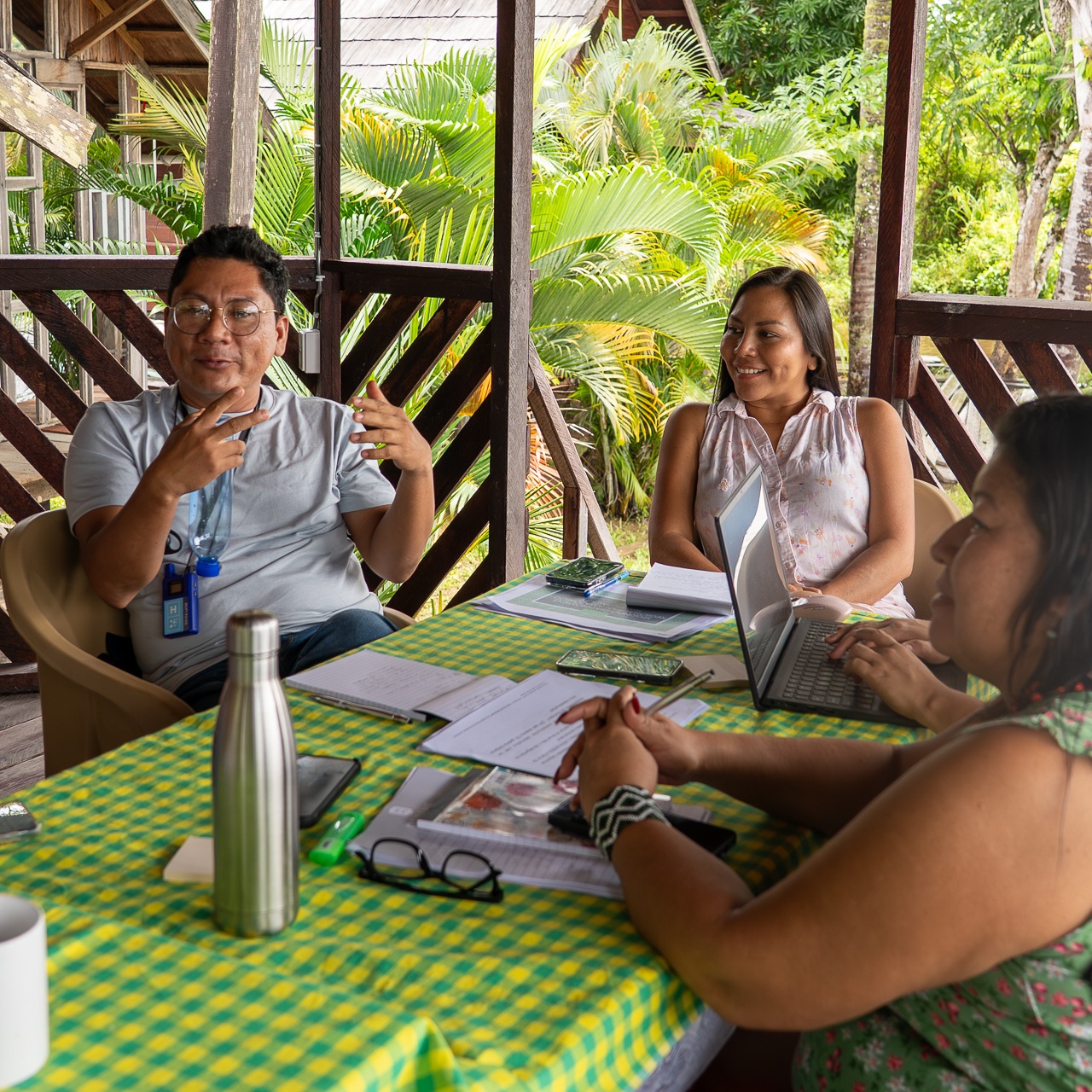
On 6 May, Earth Insight and TINTA brought together Indigenous leaders, territorial organisations, and researchers for a powerful webinar discussion on frontline strategies and evidence-based solutions to protect critical ecosystems and Indigenous territories worldwide. In case you have missed it, watch the session here:
The speakers were Fany Kuiru Castro, from the Coordinadora de las Organizaciones Indígenas de la Cuenca Amazónica (COICA), Juan Carlos Jintiach Arcos, from the Global Alliance of Territorial Communities (GATC), Julio Cusurichi Palacios, from Asociación Interétnica de Desarrollo de la Selva Peruana (AIDESEP), Leo Chum Tecca, from the Organización Regional de Pueblos Indígenas del Oriente (ORPIO) and Wanen Kanamari, from the Coordenação das Organizações Indígenas da Amazônia Brasileira (COIAB). Florencia Librizzi, Deputy Director of Earth Insight, moderated the conversation.
The session featured the release of new findings from Vanishing Footprints: The Race to Protect Isolated Indigenous Peoples in the Amazon’s Yavari-Tapiche Corridor – co-authored by ORPIO, AIDESEP, COIAB and Earth Insight. The report is a spatial analysis documenting threats over the proposed 16-million-hectare Yavarí-Tapiche Corridor along the Brazil–Peru border. This vast region is home to the world’s highest concentration of Indigenous Peoples in Voluntary Isolation and Initial Contact (PIACI by its Spanish acronym).
The conversation also explored findings from Indigenous Peoples’ Territories and Local Communities on the Frontlines, released last year by the GATC and Earth Insight, highlighting the scale of extractive threats affecting Indigenous territories globally and the critical role Indigenous stewardship plays in protecting biodiversity and climate stability.
Data shared during the session painted a stark picture: 30% of the Amazon has already been degraded or deforested, signaling that the feared tipping point may have been crossed. The effects of climate change are already altering rainfall patterns and food availability — even in areas like the Yavarí valley that have not yet experienced high deforestation rates.
During the webinar session, Indigenous leaders from across the Amazon basin shared testimonies and reported a long arc of extractivism: from the devastation of the rubber boom era to today’s oil concessions, mega-mining, and hydroelectric projects, many driven by foreign companies that bypass the right to Free, Prior, and Informed Consent (FPIC). Even the so-called “green transition,” with its demand for lithium, copper, and nickel, risks perpetuating the same cycle of territorial plunder and colonial violence. Meanwhile, organised crime, drug trafficking, and illegal mining have become some of the region’s greatest threats, with more than 300 Amazonian rivers now contaminated by over 6,000 tonnes of mercury.
A central theme was the survival of Indigenous Peoples in Voluntary Isolation (PIACI). Leaders explained how established communities serve as a living shield, protecting both territory and the rights of Peoples who have chosen no contact with outsiders. Representatives described months-long monitoring expeditions in the Yavarí-Tapiche Corridor, the region with the greatest concentration of PIACI, where pressure from illegal miners, settlers, and landowners is relentless. Yet, despite these efforts, State abandonment remains a persistent reality: governments often refuse to recognise these communities’ existence, their dependence on forest integrity, and, even where territorial demarcation has been achieved, institutional support and law enforcement are not provided.
The economic dimension is equally urgent. Without viable livelihoods, communities become vulnerable to recruitment by illegal activities. Young people are drawn into coca cultivation, illegal logging and mining. Access to health care in remote areas is critical as a firewall against diseases reaching PIACI, who have no immunity to outside pathogens. The importance of providing direct funding to indigenous communities and their projects to ensure the protection of the Yavarí-Tapiche corridor was underlined. Biodiversity, biocultural diversity, rainforest, and climate protection can happen successfully when the basic needs of the surrounding communities have been met.
The webinar participants underscored that defence of the Amazon demands a global alliance and a deep recognition of the work Indigenous communities carry out every day on the front lines to keep our planet alive — and it demands that we stand with them. They also highlighted the solutions put forward by Indigenous communities and organisations: