
9 July 2026

The Yutzu Group aims to strengthen collaboration between organisations across the Pan-Amazon region so that the experiences, lessons learnt and strategies developed in one territory can inspire and strengthen processes in others.
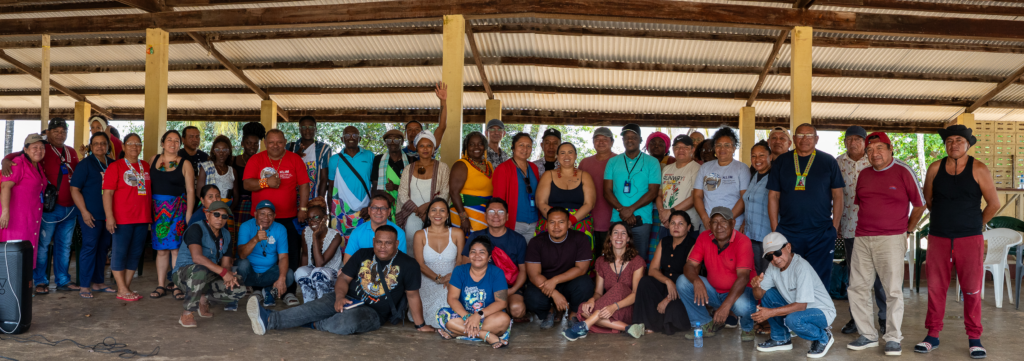
Suriname hosted the second meeting of the Yutzu Group, a regional platform for reflection, guidance and learning that brings together representatives of Indigenous Peoples, Afro-descendant Peoples and local communities from eight countries across the Pan-Amazon region, organised by The Tenure Facility, with strategic support from TINTA.
Over the course of seven days, the group travelled through territories, engaged in dialogue with local leaders, and advanced the collective development of recommendations for The Tenure Facility’s Amazon Programme.
Suriname was not chosen by chance. In this country, Indigenous and Tribal Peoples continue to struggle for the legal recognition of their collective territorial rights. Despite rulings and decisions by the Inter-American Court of Human Rights in favour of their rights, many of these remain unimplemented by the government and national judicial system, while extractive pressures continue to grow. Visiting and gaining first-hand insight into this political and territorial context was, in itself, a valuable learning experience.
The Yutzu Group began its journey by setting foot, eyes and ears in Saamaka territory, a region encompassing more than 1.4 million hectares of forests, rivers and sacred sites. There, members met with authorities and representatives of the Association of Saamaka Communities (Vereniging van Saamaka Gemeenschappen – VSG) to exchange legal strategies, governance experiences and community-led approaches to territorial defence.
The 2007 Inter-American Court ruling in favour of the Saamaka People remains unimplemented. Meanwhile, nearly one-third of their territory has been granted as concessions for mining and logging activities. “Our territory is our home and sustains our existence, yet others continue to make decisions about it,” said Ronelda Lienga, a member of the VSG Board.
Echoing this concern, Hugo Jabini, Managing Director of VSG, stated: “Those governing Suriname can go to New York and proclaim that they want to protect the forest, but that is not the achievement of the government. It is the achievement of Indigenous and Tribal Peoples. Thanks to us, 90 per cent of the country’s forests remain preserved.”
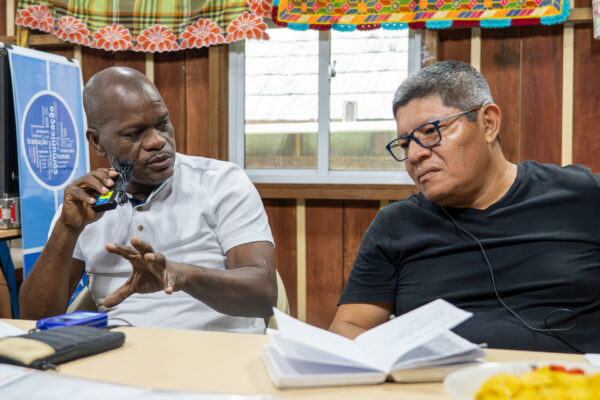
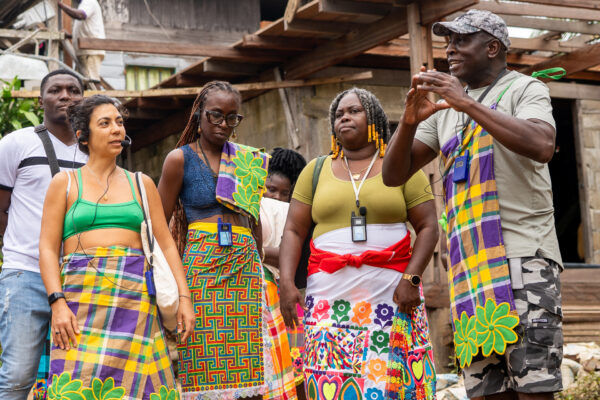
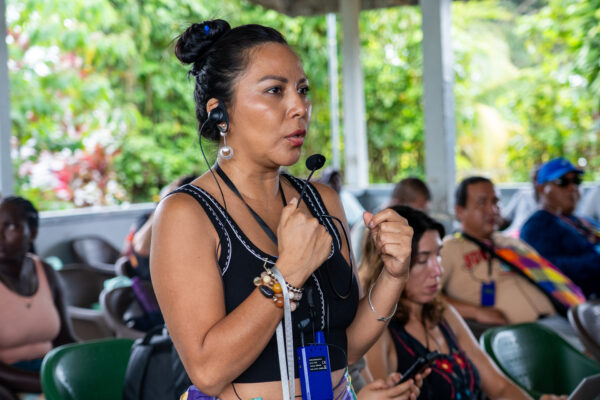
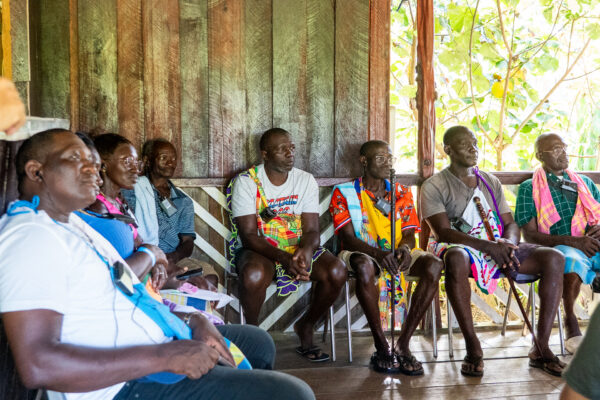
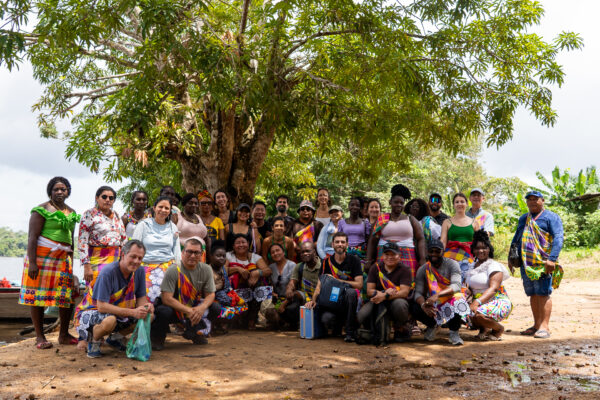
The visit also included a stop at the Saamaka Museum, a space that preserves the living history of the people’s resistance and their relationship with neighbouring Indigenous communities. Since Saamaka ancestors escaped slavery and found refuge in the forest, exchange and cooperation with Indigenous Peoples have been a defining part of their way of life.
“I learned about the role of memory in our recognition processes. Peoples who build their memory build their history, and it is that history that writes our rights,” reflected Gardênia Mota Ayres, a member of the Yutzu Group from Brazil.
The Yutzu Group’s second destination in Suriname was Galibi territory, the ancestral homeland of the Kali’na and Lokono Indigenous Peoples. There, where the Marowijne River meets the Atlantic Ocean, the group encountered a community whose extraordinary ecological wealth — home to one of the world’s most important sea turtle nesting sites — coexists with decades of exclusion and lack of recognition.
“Here, the turtles have more rights than we do,” shared a community leader during the exchange, a statement that encapsulates the frustration and dissatisfaction felt by local communities regarding the government’s failure to legally recognise their rights.
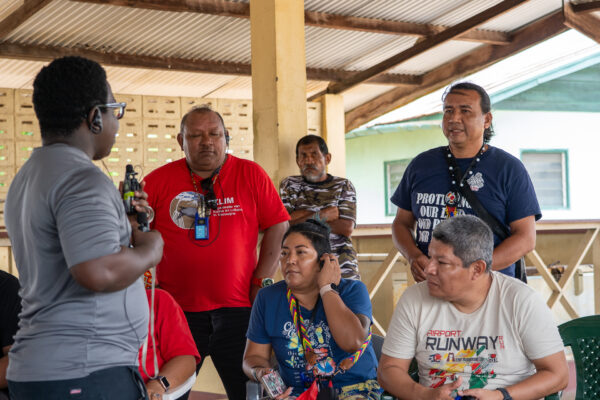
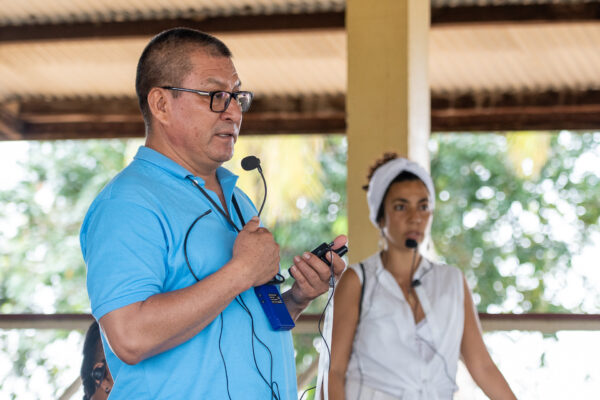
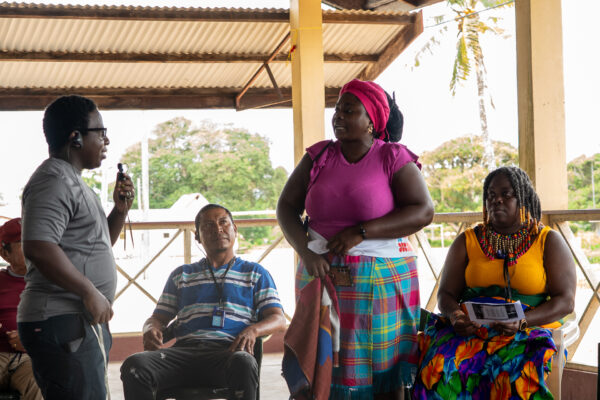
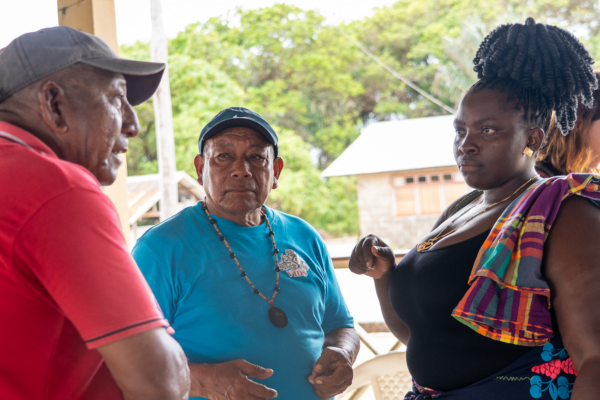
The Yutzu Group met with traditional authorities as well as members of the Association of Indigenous Village Leaders in Suriname (Vereniging van Inheemse Dorpshoofden in Suriname – VIDS) and the Kali’na and Lokono Indigenous Peoples of Lower Marowijne (Kaliña en Lokono Inheemsen Beneden Marowijne – KLIM) to discuss the Kali’na and Lokono case before the Inter-American Human Rights System. Although the 2015 ruling ordered the State of Suriname to guarantee collective land titling, protect natural resources, and ensure Indigenous participation in the management of protected areas, these measures have yet to be implemented.
Against this backdrop, participants highlighted the importance of participatory mapping, territorial monitoring, legal advocacy and leadership development as essential tools for ensuring territorial governance, all of which require sustained support.
Margriet Biswane, Chief of the Lokono community of Alfonsdorp, emphasised: “We must not remain silent. We must stand up, make ourselves visible, and raise our voices without fear, because we know we speak from our rights.”
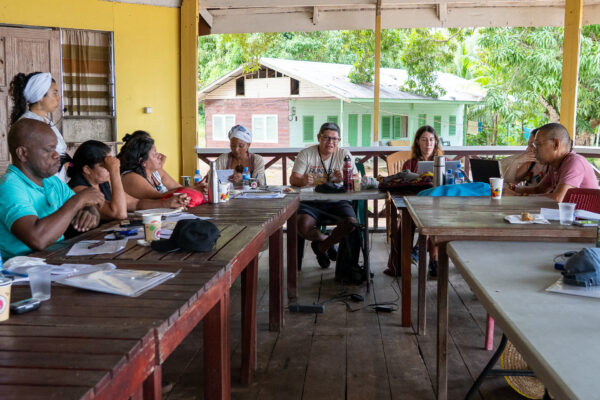
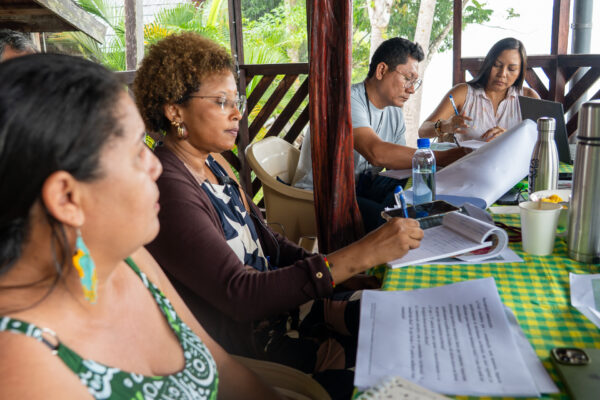
The visit to Suriname also included internal working sessions of the Yutzu Group on priority themes: territory and rights, community financing, women and youth, and capacity strengthening. These spaces provided opportunities to reflect on alliances between Indigenous and Afro-descendant or Tribal Peoples, while also exploring different territorial defence strategies developed in contexts where recognition of collective rights remains limited.
The experience also demonstrated that the existence of legal frameworks and favourable rulings alone does not guarantee the effective protection of territories, as many threats persist regardless of the level of legal recognition achieved.
The lessons shared in Suriname reaffirmed a conviction that the Yutzu Group has held since its first meeting in the Tapajós region in 2025: sustainable solutions for the Amazon must be built from the territories themselves, through dialogue between ancestral knowledge and technical expertise, combining mobilisation, legal advocacy and organisational strengthening.
“There is always a way forward. That certainty must never be lost. Our Peoples have struggled for decades — a struggle that is inherited, transformed and carried forward. That is why young people must become involved in organisational processes,” concluded Jimmy Piaguaje Payaguaje, a member of the Yutzu Group from Ecuador.
The Yutzu Group will continue moving forward through new alliances and shared learning, contributing to the collective construction of sustainable futures rooted in the territories.