Participants of the Learning Pathway on Women Gather in Ecuador to Exchange Experiences on Territorial Governance in the Amazon
From 25 to 30 August, Puyo, located in the heart of the Ecuadorian Amazon, hosted the Learning Exchange “Indigenous Women, Autonomy and Territorial Governance”. The gathering brought together women leaders and technical teams from the Interethnic Association for the Development of the Peruvian Rainforest (AIDESEP) and the Native Federation of the Madre de Dios River and Tributaries (FENAMAD) in Peru; the National Organization of Indigenous Peoples of the Colombian Amazon (OPIAC); and the Confederation of Indigenous Nationalities of the Ecuadorian Amazon (CONFENIAE), as the host organisation.
The meeting combined peer-to-peer dialogue with visits to territorial initiatives led by Indigenous women. It was organised around three collectively prioritised thematic areas: political leadership and participation in territorial governance; the transmission of ancestral knowledge and the care of territory; and autonomy and direct funding for women and their organisations.
The Chakra: A Strategy for Transmitting Knowledge and Ancestral Wisdom
One of the most valuable days was spent at the Lisan Wasi Community Tourism Centre and its ancestral chakra, in the San Jacinto del Pindo Commune, Kichwa territory, located 25 kilometres from the city of Puyo.
Guided by the women of Lisan Wasi and the Pinduk Warmis Association, representatives from CONFENIAE, AIDESEP, FENAMAD and OPIAC learned about a progressive restoration initiative on land previously used for cattle ranching, through the recovery of chakras and local biodiversity. The experience demonstrated how strengthening chakras connects different dimensions of community life: they feed families, conserve biodiversity, safeguard seeds, transmit knowledge, and contribute to community tourism and the sustainability of families’ livelihoods.
After the visit to the chakra, an experience fair gave participants the opportunity to share their own chakra initiatives and intergenerational knowledge-transmission practices developed in their territories.
Shared Challenges and Strategies
Political leadership and participation in territorial governance were central themes of the exchanges. Participants shared their experiences of ensuring that women’s agendas and management instruments effectively influence organisational structures, decision-making spaces, resource allocation and institutional processes, so that they strengthen territorial governance.
The exchange produced a range of shared strategies, including: promoting the participatory development of women’s agendas; securing technical support to advance their implementation; adapting the narratives of gender-focused proposals and actions to different contexts; ensuring that initiatives respect territoriality and community strategies; aligning women’s agendas with organisational management instruments and regulations to facilitate implementation; and positioning them as tools for setting priorities with allied organisations and cooperation partners.
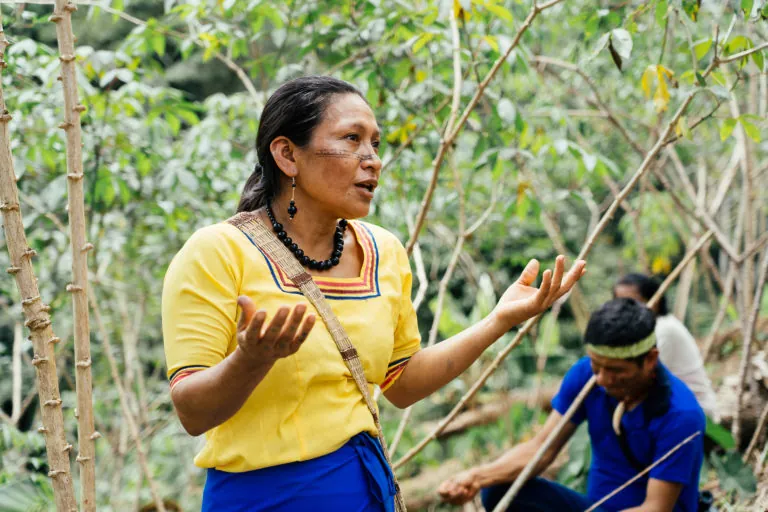
Luz Vargas, coordinator of the chakras at the Lisan Wasi Community Tourism Centre, shared reflections on the importance of preserving and passing on ancestral knowledge of chakra cultivation and management.
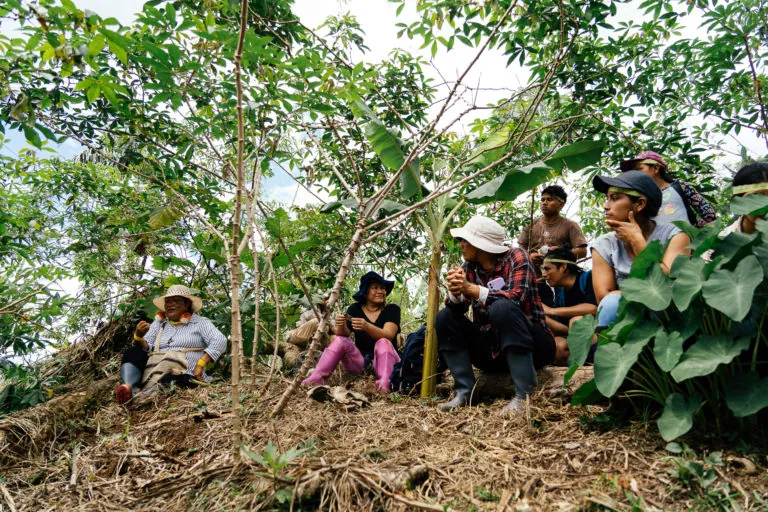
Dialogue during the visit to the ancestral chakra of the Lisan Wasi Community Tourism Centre.
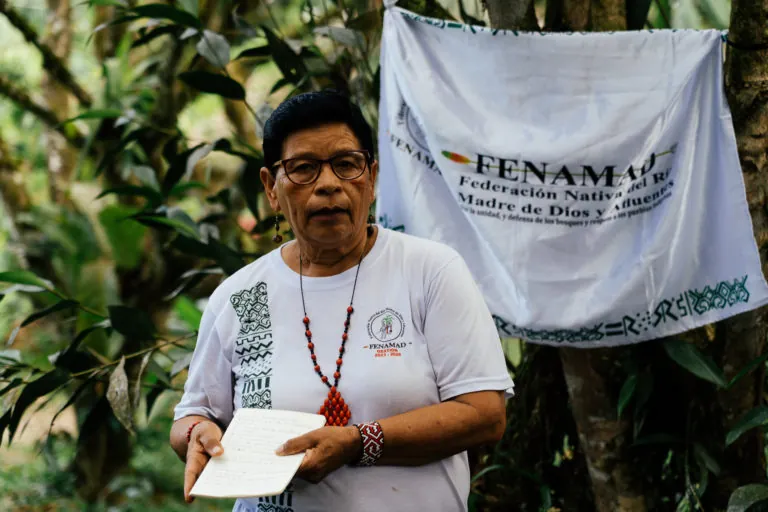
Amalia Añez, Coordinator of FENAMAD’s Indigenous Women’s Area, shared her organisation’s experience with integrated chakras.
Bahía Flores Pacheco | TINTA, 2026
In the final sessions, the women leaders and technical staff also identified the conditions needed to sustain and carry forward the processes led by Indigenous women over time, particularly in the face of changes in leadership.
The following strategies emerged:
Safeguard and transfer organisational memory by documenting progress, learning and commitments, and handing them over in an organised way to new leadership teams.
Plan and support leadership transitions, with clear timelines and responsibilities, without undermining the autonomy of those who take on these roles.
Transfer, alongside information, the capacities and relationships built with communities, technical teams and funders.
Promote generational renewal by creating spaces for other women and young people to progressively take on responsibilities.
Maintain and strengthen the networks and strategic alliances built along the way.
“Through this exchange, I understood that we have not only come to learn; we also teach. Our experience can also be useful to other women and young people in their work within organisations” said Teresita Antazú, AIDESEP’s national leader responsible for the Indigenous Women’s Programme.
A Pathway That Continues to Build the Way Forward
This gathering took place as part of the Learning Pathway on Women and Territorial Governance, which TINTA has been promoting since 2024 through its Learning and Collaboration Programme, together with territorial organisations and strategic allies.
The gatherings held in Bolivia (2024) and Brazil (2025) helped to highlight the strategic role of Indigenous women in territorial defence, as well as the structural barriers that continue to limit their effective participation.
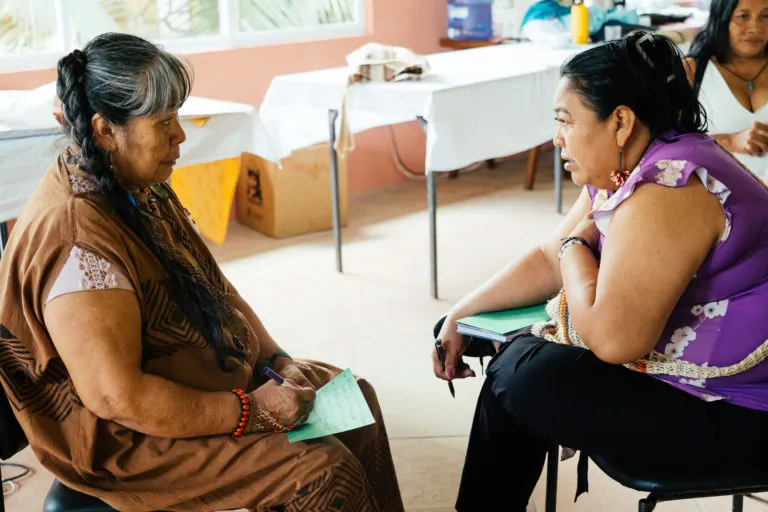
Peer-advisory session, in which the group drew on its collective experience to reflect on challenges and strengthen proposals for sustaining and consolidating each organisation’s processes.
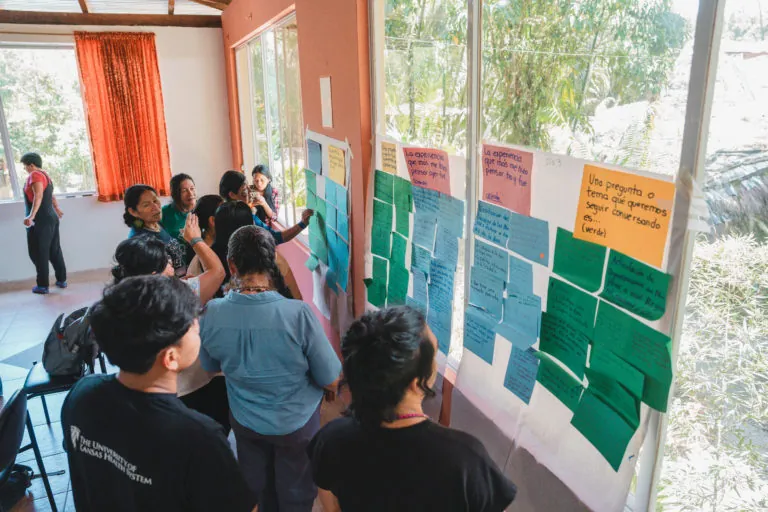
Participatory prioritisation exercise, identifying what is needed to ensure that women’s agendas continue beyond changes in organisational leadership.
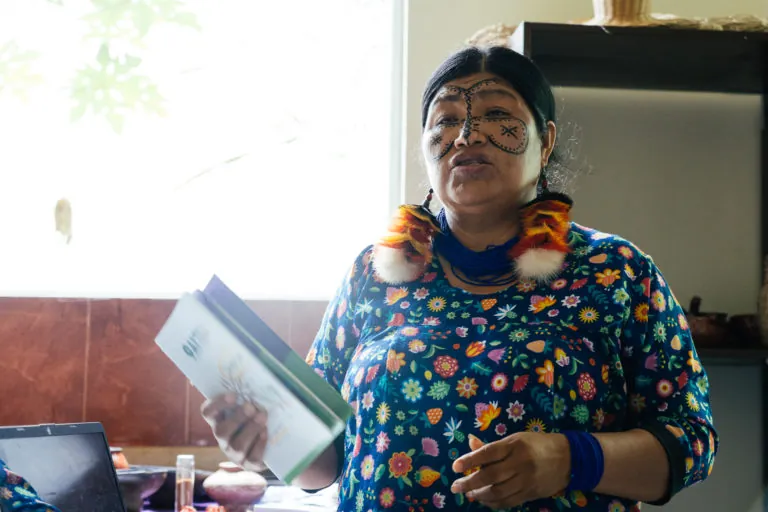
Mariana Vargas, President of the ARAK Association of Achuar Women, shared how an agroecological production initiative also became a process of organisation, economic autonomy and women’s leadership.
Bahía Flores Pacheco and William Noteno | TINTA, 2026
This year, the Learning Pathway seeks to consolidate what has been built so far and prioritise strengthening organisational processes from within Indigenous organisations themselves. It starts from the recognition that strong territorial governance requires robust structures, with effective mechanisms for participation, representation and decision-making.
The exchange in Puyo, which prioritised the participation of a focused group of representatives and fostered a space of trust, dialogue and active participation, generated new learning, reflections and connections that participants are taking back to their organisations. These outcomes contribute to the continuity and sustainability of the Learning Pathway on Women and Territorial Governance, strengthening exchange, collaboration and the collective development of strategies among the participating territorial organisations, with a view to advancing towards more inclusive, equitable and representative territorial governance.
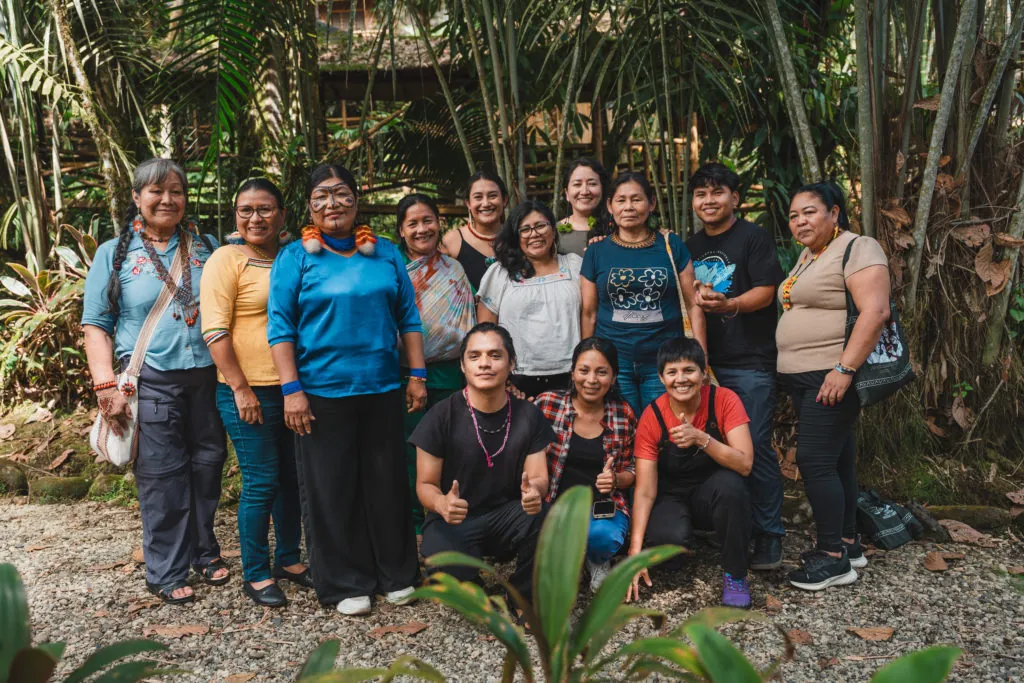
Participants of the Learning Pathway on Women and Territorial Governance during the exchange in Puyo, Ecuador.